
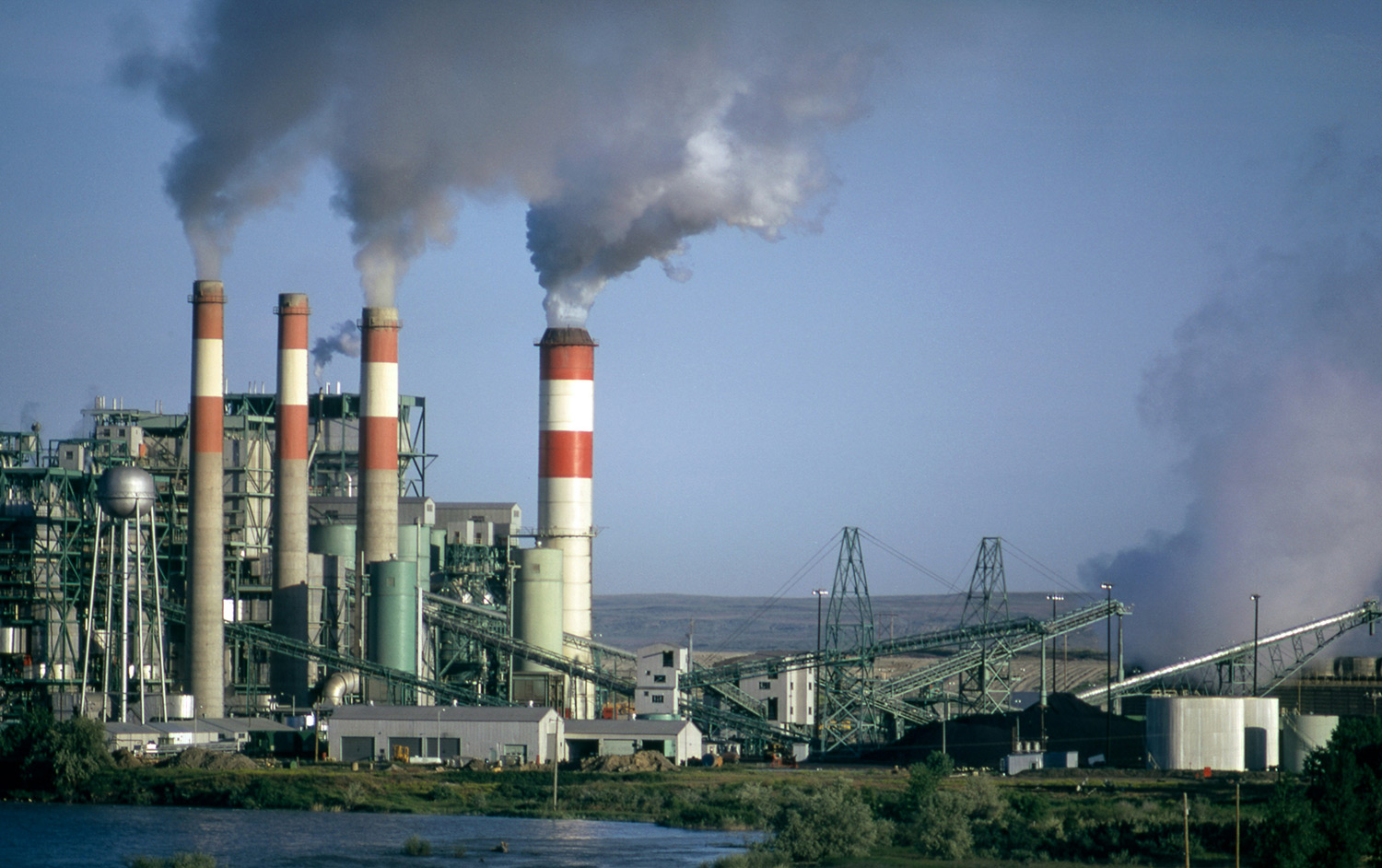
What Is a GHG Inventory and Why Does Your Business Need One?
A major customer has just asked your company to provide greenhouse gas (GHG) emissions data. Or perhaps you’re considering setting a Science Based Target (SBTi), responding to an RFP, or preparing for EcoVadis or CDP.
Whatever prompted the request, you’ve likely come across the term GHG inventory. For many organizations, it’s the first and most important step in understanding and managing their greenhouse gas emissions.
A greenhouse gas inventory is the foundation of nearly all of the most common corporate sustainability initiatives. Whether an organization is reporting emissions, setting carbon reduction goals, pursuing sustainability certifications, responding to customer or investor requests, or meeting supply chain reporting requirements, the process almost always begins with measuring carbon emissions.
Unfortunately, many businesses don’t begin thinking about a GHG inventory until a large client, investor, Request for Proposal (RFP), or regulator requests one. By that point, they’re often months away from being able to provide accurate and defensible emissions information.
The good news is that once you understand how a greenhouse gas inventory works, the process becomes much easier to plan, even if your organization has never measured its emissions before.
This guide explains:
- What a GHG inventory is
- How greenhouse gas inventories are developed
- Why companies conduct GHG inventories
- Common mistakes organizations make
- When your company may need one
- How Think Evergreen helps organizations build accurate, assurance-ready inventories
Whether you’re just beginning your sustainability journey or looking to improve an existing inventory, understanding the fundamentals of greenhouse gas accounting is the first step.
What Is a GHG Inventory?
A greenhouse gas (GHG) inventory is a comprehensive assessment of all greenhouse gas emissions produced by an organization during a defined reporting period, most commonly the previous calendar year.
These emissions are measured using internationally recognized greenhouse gas accounting methodologies and reported in metric tons of carbon dioxide equivalent (CO₂e). Almost every action a company takes can produce several different greenhouse gases. For example, using electricity can generate emissions from carbon dioxide, methane and nitrous oxide. While there are many other greenhouse gasses, these three are the most common and are typically the minimum expected to be measured, even for an office or remote-based company.
Since each gas has a different impact on the climate, we need a common way to measure the impact of a unit of greenhouse gas emissions, as to allow for a better understanding of where the largest impacts on climate are coming from. This is why all gases get reported as an equivalent to carbon dioxide.
Organizations produce greenhouse gas emissions in many different ways.
Some emissions are generated directly through activities the organization owns or controls, such as operating furnances, driving company vehicles, or leaking refrigerants from air conditioning equipment.
Other emissions occur indirectly through activities such as purchasing electricity, buying products and services, transporting materials, disposing of waste, employee commuting, business travel, and many other activities throughout a company’s value chain.
The purpose of a GHG inventory is to identify and quantify these emissions so an organization can:
- Understand where emissions originate
- Identify which sources of emissions create the largest impact
- Draft plans to reduce emissions
- Meet client requirements
- Comply with regulations
- Meet sustainability reporting requirements
- Establish science-based targets
- Track progress over time
The Greenhouse Gas Protocol
What Are Scope 1, Scope 2, and Scope 3 Emissions?
Most corporate greenhouse gas inventories are conducted following the Greenhouse Gas Protocol Corporate Standard, commonly referred to simply as the GHG Protocol.
Developed through a partnership between the World Resources Institute (WRI) and the World Business Council for Sustainable Development (WBCSD), the GHG Protocol is the world’s most widely used greenhouse gas accounting framework.
Rather than prescribing one specific calculation method, the GHG Protocol establishes principles and guidance for organizations to consistently account for and report emissions.
Among many other topics, the GHG Protocol provides guidance for:
- Organizational boundaries
- Operational boundaries
- Scope 1, Scope 2, and Scope 3 emissions
- Emissions calculation methodologies
- Data quality
- Reporting principles
- Base year selection
- Recalculations
- Documentation requirements
Practically all other sustainability frameworks, including the Science Based Targets initiative (SBTi), CDP, EcoVadis, and even the ISO 14064 Standards, either require or strongly encourage organizations to follow the GHG Protocol.
As a result, organizations that build their inventory according to the GHG Protocol are often better positioned to support future sustainability initiatives without having to completely rebuild their inventory. This includes GHG Protocol emission sources that are minimal, but still applicable to your business.
To simplify greenhouse gas accounting, the GHG Protocol divides organizational emissions into three groups known as Scope 1, Scope 2, and Scope 3 emissions.
Understanding these three scopes is one of the most important concepts in corporate greenhouse gas accounting.
Scope 1 Emissions
Scope 1 emissions are direct emissions from sources from sources owned or controlled by the organization.
The four primary types of Scope 1 emissions are:
Stationary Combustion
Emissions produced by equipment owned or operated by a company that burns fuel while remaining in a fixed location.
Examples include:
- Boilers
- Furnaces
- Water heaters
- Generators
- Manufacturing equipment
Mobile Combustion
Emissions produced from fuel consumed by company-owned or company-controlled vehicles.
Examples include:
- Cars
- Trucks
- Delivery vehicles
- Fleet vehicles
- Construction equipment
- Forklifts
Fugitive Emissions
Emissions released unintentionally from equipment or systems owned or operated by the company.
The most common example is refrigerant leakage from HVAC or refrigeration systems, although other industrial gases may also apply depending on the organization. As an example, some healthcare corporations report the use of anesthetic medial gas usage, as they are often greenhouse gasses.
Process Emissions
Some industries produce greenhouse gases directly through manufacturing or industrial processes rather than through fuel combustion.
These emissions are commonly found in industries such as:
- Cement manufacturing
- Chemical manufacturing
- Metals
- Glass
- Other industrial operations
Scope 2 Emissions
Scope 2 emissions are indirect emissions associated with purchased energy.
Although the emissions physically occur at the power plant or utility generating the energy, responsibility for those emissions is attributed to the organization consuming the energy.
The most common Scope 2 sources include:
- Purchased electricity
- Purchased steam
- Purchased heating
- Purchased chilled water
For many office-based organizations, purchased electricity represents one of the largest, and possibly the only, Scope 2 emissions source. These emissions only represent the combustion of the fuel used to generate the purchased energy. They do not represent the upstream emissions associated with getting that fuel to the power plant. Those emissions are captured separately in Scope 3 Category 3.
Scope 3 Emissions
Scope 3 emissions include all other indirect emissions occurring throughout an organization’s value chain.
Unlike Scope 1 and Scope 2 emissions, Scope 3 emissions often occur outside of an organization’s direct operational control, making them significantly more difficult to quantify.
The GHG Protocol identifies 15 Scope 3 categories:
- Purchased goods and services
- Capital goods
- Fuel- and energy-related activities
- Upstream transportation and distribution
- Waste generated in operations
- Business travel
- Employee commuting
- Upstream leased assets
- Downstream transportation and distribution
- Processing of sold products
- Use of sold products
- End-of-life treatment of sold products
- Downstream leased assets
- Franchises
- Investments
Not every category applies to every organization. Depending on the company’s operations, only a subset of these categories may be relevant. Nearly all companies will have emissions within category 1, category 6, and category 7, even office-based and remote companies. This is because all companies need to purchase goods and services, even if minimal such as website domains and hosting. All companies also likely have some sort of business travel for events or meetings. Last, all business have emissions within employee commuting, because it’s where remote work emissions are captured. So, all businesses will either have physical commuting emissions and/or remote work emissions.
For practically all organizations, Scope 3 emissions represent the largest portion of their total greenhouse gas inventory. This is often true even for large utility companies who’s business model is to sell electricity generated from fuels that create scope 1 emissions.
In fact, it is common for purchased goods and services alone to exceed the combined emissions from Scope 1 and Scope 2.
Because of this, companies are increasingly engaging suppliers to obtain supplier-specific emissions data rather than relying solely on industry-average or spend-based emissions factors. This is especially the case, as spend-based emission factors tend to be more conservative than supplier-based emission factors.
This trend is one of the primary reasons suppliers are increasingly receiving requests from customers for greenhouse gas information within frameworks such as EcoVadis, CDP, and other frameworks.
Why Do Companies Conduct a GHG Inventory?
Organizations conduct greenhouse gas inventories for many different reasons. Some companies are legally required to conduct an annual GHG inventory, while others do so voluntarily. Others are responding to customer requests or investor expectations.
In our experience, these reasons generally fall into three categories:
- Organizations that are legally required to measure and report greenhouse gas emissions.
- Organizations that need greenhouse gas information to win or retain business or investor support.
- Organizations pursuing voluntary sustainability initiatives.
The second category has grown dramatically over the past several years and is now one of the most common reasons organizations contact Think Evergreen.
While every organization has its own reasons for measuring greenhouse gas emissions, the underlying drivers are becoming increasingly consistent across industries. In many cases, companies initially view a GHG inventory as a sustainability project. Over time, however, they realize it has become a business requirement.
Below is more detail on some of the most common reasons organizations conduct greenhouse gas inventories.
Legislative and Regulatory Requirements
Climate-related legislation continues to expand around the world. Depending on where your company operates and the customers you serve, you may already be subject to greenhouse gas reporting requirements or may become subject to them in the future.
Examples of legislation and reporting frameworks include:
- California Senate Bill 253 (Climate Corporate Data Accountability Act)
- California Senate Bill 261 (Climate-Related Financial Risk Act)
- The European Union’s Corporate Sustainability Reporting Directive (CSRD)
- Various climate-related disclosure requirements for public companies
- Government procurement requirements
- Industry-specific reporting regulations
Not every regulation applies to every organization. Requirements often depend on factors such as company size, annual revenue, geographic location, ownership structure, and industry.
Even if your organization is not currently required to report greenhouse gas emissions, understanding these regulations can help you prepare for future requirements and avoid being caught off guard. This is especially true as more federal and state governments, as well as other regulating entities continue to set climate related requirements.
Customer Requirements and RFPs
One of the biggest reasons organizations begin measuring greenhouse gas emissions is because a major existing client requires or encourages them to.
Many of the world’s largest companies, such as Amazon, Mastercard, AstraZeneca, and many others, have established climate commitments that require them to collect emissions data from their their supply chain suppliers.
As a result, suppliers are increasingly receiving requests to provide greenhouse gas inventories, emissions data, Science Based Targets, CDP responses, EcoVadis scores, or other sustainability information.
As an example, in order to hit it’s own emissions reduction goals, MasterCard requires the vast majority of it’s suppliers to conduct a GHG inventory, share the proportion of emissions generated from that supplier as a result of MasterCard purchasing from them, set a Science-Based Target, and possible other sustainable reporting, all on an annual basis. If you cannot provide the data to MasterCard, or any other company requesting emissions data, you risk loosing them as a client.
For many smaller and medium sized business, loosing a contract with such a large company can be devastating to its revenue and image.
In addition, many RFPs now also require or encourage companies to have GHG inventories, emissions data, and emission targets.
Organizations that can provide accurate and defensible greenhouse gas data are often better positioned during procurement discussions, contract renewals, and competitive bidding processes. Companies are realizing that the cost of a GHG inventory and emissions reduction plan is well worth the potential revenue it stands to lose or gain.
All industries are highly saturated and competitive these days and companies don’t want a lack of sustainability efforts to be the reason why they got outcompeted by another company.
Investor Expectations
Investors, lenders, insurers, and financial institutions are increasingly evaluating climate-related risks when making investment and financing decisions.
For some organizations, greenhouse gas accounting provides an opportunity to better understand climate-related risks while demonstrating responsible environmental management to financial stakeholders. Further, stakeholders and investors are requesting GHG data so that if legislation, markets, and client expectations change, the company is prepared to respond properly and promptly.
Science-Based Targets and Net-Zero Commitments
Organizations interested in establishing Science Based Targets or pursuing net-zero commitments almost always begin with a greenhouse gas inventory.
Without an emissions baseline, it is impossible to establish meaningful reduction targets or measure progress over time. A detailed GHG inventory is required to become validated by the Science-Based Target Initiative. An annual GHG inventory is required as well, along with reporting against emission reduction goals.
A high-quality inventory provides the foundation for every emissions reduction strategy. After all, you cannot manage what you don’t measure.
What Does This Mean for Your Business?
Many organizations assume greenhouse gas accounting only applies to large corporations. However, companies of all sizes are increasingly being asked for greenhouse gas data from clients, customers, investors, lenders, and procurement teams.
In many cases, organizations are not prepared for these requests as they have never conducted a GHG inventory before. Unfortunately, conducting a first-time greenhouse gas inventory is rarely something that can be completed in a few weeks, especially if you are trying to do it by yourself for the first time or need to first hire a consultant.
Organizations that already have an inventory are able to respond much quicker. In the case or responding to an RFP or key client data request, this could lead to the gain or loss of an important source of revenue.
Unsure whether your company actually needs a GHG inventory?
We help organizations determine exactly what’s required—before they spend time collecting data.
Signs Your Company May Need a GHG Inventory
Your organization may benefit from a greenhouse gas inventory if:
- Customers have requested greenhouse gas emissions data.
- You’re responding to RFPs that include sustainability requirements.
- You’re considering setting Science Based Targets.
- Investors or lenders have begun asking ESG-related questions.
- You’re preparing a sustainability report.
- You’re completing CDP, EcoVadis, B Corp, or similar assessments.
- You’re evaluating carbon reduction opportunities.
- You anticipate future climate-related reporting requirements.
- Internal company culture or values align with environmental integrity.
- You’re seeking new opportunities to differentiate among competitors.
Received a Request for GHG Data?
Customer and reporting requests can vary significantly. Some organizations need only a Scope 1 and Scope 2 inventory, while others may need Scope 3 emissions, supporting documentation, CDP or EcoVadis reporting, Science Based Targets, or an inventory prepared for third-party assurance.
Think Evergreen can help you understand what is actually being requested and determine the most practical way to respond.
Can Software Conduct a GHG Inventory?
There are hundreds of greenhouse gas accounting software platforms available today. We have used, tested, audited, and helped refine several of these tools. Many of them are excellent at organizing data, storing information, automating calculations, and producing dashboards.
The main issue with software is that it does not replace greenhouse gas accounting expertise. For example, software cannot automatically determine whether all applicable emissions sources have been identified, if organizational boundaries were established correctly, if assumptions are adequately documented, or even if data was entered correctly.
One other issue with software is the usefulness of the output. Some produce highly detailed spreadsheets with dozens of columns of poorly labeled data, which makes it difficult to have verified and causes confusion for annual report writers. Others won’t give you all of the information you will often need, as they believe it’s part of their proprietary work. If your goal of using software is to produce a report that can be used for any and all GHG related sustainability initiatives, you may find some of these software tools to not be able to support those goals.
Simply put, poor-quality information entered into software produces poor-quality outputs. This makes it especially important to have the technical expertise to enter the data properly so that the correct and desired results are the output. Further, a lack of clear, useful outputs lowers the usefulness of software.
For organizations conducting their first inventory, we generally recommend focusing on building a technically sound inventory first. Software can then become an excellent tool for organizing, updating, and reporting that information over time.
At Think Evergreen, we develop customized calculation spreadsheets and reporting dashboards tailored to each client’s needs. This approach provides greater transparency, flexibility, and control while avoiding many of the limitations associated with proprietary software platforms. In addition, one of our expert consultants is there every step of the way to ensure the highest quality results.
What Does the GHG Inventory Process Look Like?
Although every organization is different, most greenhouse gas inventories follow a similar process. They general all follow the Greenhouse Gas Protocol Standard and/or ISO 14063.
Step 1: Define Organizational and Operational Boundaries
The first step is determining which parts of the business will be included within the inventory, also known as the organizational and operational boundary.
Organizations may own subsidiaries, leased facilities, joint ventures, manufacturing plants, warehouses, retail locations, or other business assets. The Greenhouse Gas Protocol provides guidance on determining which operations should be included based on organizational and operational boundaries.
This step establishes the foundation for the entire inventory.
While you are often not required to strictly follow the GHG Protocol, it’s important to include all applicable parts of the boundary based on what your goals are. Some reporting frameworks ask information only about scope 1 and 2, some ask detailed information about company structure, while others need specific subsets and calculations with scope 3. If the boundary is not defined correctly at the beginning, everything that follows could be less useful or missing important pieces.
Step 2: Collect Activity Data
Once the inventory boundary has been established, organizations begin collecting activity data around the individual emission sources within the defined boundary.
The highest-quality greenhouse gas inventories rely on primary data whenever possible. Primary data is data from a specific activity, rather than an estimate or approximation.
Examples include:
- Utility bills
- Natural gas consumption meter data
- Fuel records
- Vehicle mileage
- Refrigerant purchases
- Waste records
- Business travel distance records
- Supplier-provided emissions information
For many organizations, this almost always involves collecting twelve months of electricity and fuel heating data for Scope 1 and Scope 2 emissions for each office location. If this data is not available, proxy data can be used along with the area of each office space to estimate the total electricity and fuel usage. It also often means holding conversations with the building manager to collect data, as its not always available to tenants of the building.
Scope 3 often requires additional information related to purchased goods and services, transportation, employee commuting, leased assets, investments, waste generation, and many other activities. Due to the nature of these emission categories, data is often harder to source. In most cases, primary data, such as the number of a certain good that was purchased or the total distance employees flew for business travel is not available. In these cases, companies often use spend data as a substitue, which is less accurate but often the only data availble.
Purchased goods and services and capital goods are frequently among the largest categories within an organization’s inventory. One of the biggest trends in greenhouse gas accounting today is supplier engagement for this reason. Because of this, companies are increasingly asking suppliers to conduct their own greenhouse gas inventories and provide supplier-specific emissions data rather than relying solely on spend-based methodologies or industry averages.
Supplier-specific data often improves inventory accuracy while helping both organizations better understand emissions reduction opportunities throughout the supply chain.
Step 3: Calculate Emissions
Once activity data has been collected, appropriate emission factors are applied.
Emission factors may come from recognized sources such as:
- U.S. EPA EEIO
- EPA Emission Factors Hub
- eGRID
- DEFRA
- The Climate Registry
- Other recognized greenhouse gas databases
Step 4: Prepare the Inventory and Report
After calculations are complete, organizations prepare inventory reports. These may range from a simple spreadsheet to a detailed sustainability report, depending on the organization’s goals. Many companies share these reports annual and use them for all of there sustainability reporting requirements, while others only share internally.
Some companies also have their emissions verified by a third-party emissions auditor. In most cases, verification is not required however more companies are having their inventories verified as part of mandatory or voluntary emission reporting or legislation.
For example, SB253 requires certain entities doing business in the state of California to have their emissions verified. Climate Impact Partners also requires third party verification to be awarded it’s CarbonNeutral Certification. Others choose to have their inventory verified to provide a higher level of confidence in their reports, as its publicly shared and could hurt their image if they were found to be reporting knowingly incorrect information.
Common Mistakes Companies Make During Their First GHG Inventory
Preparing a greenhouse gas inventory may sound straightforward to some, however it can quickly become complicated, especially for someone who has never done it before.
Organizations must make hundreds of technical decisions throughout the inventory process, including determining organizational boundaries, selecting methodologies, identifying applicable Scope 3 categories, choosing emission factors, documenting assumptions, estimating missing data, and interpreting guidance from multiple standards and reporting frameworks.
For this reason, it is common for first-time inventories, and even inventories prepared by experienced organizations, to contain errors.
Some of the most common issues we encounter include:
- Excluding applicable emission sources
- Using low-quality or incomplete activity data
- Applying outdated emission factors
- Selecting inappropriate calculation methodologies
- Misclassifying Scope 3 categories
- Using unsupported assumptions
- Improperly accounting for carbon offsets
- Improperly accounting for biogenic carbon
- Insufficient documentation of methodologies and assumptions
While differences in methodology are common between practitioners, these differences only become problematic when they are material.
In greenhouse gas accounting and assurance engagements, a common materiality threshold is 5% of reported emissions. Errors exceeding this threshold can affect reporting outcomes, reduction strategies, customer reporting, sustainability disclosures, and stakeholder confidence in the inventory.
Although many inventories are never formally verified, organizations should strive to prepare inventories that could withstand third-party review.
Examples From Our Experience
One of the biggest advantages of working with an experienced greenhouse gas consultant is avoiding mistakes that are difficult to identify without having seen many inventories.
Below are a few examples from projects we have reviewed or received from companies unhappy with their previous inventory composer.
Example 1: Healthcare Provider
In one engagement, we reviewed the greenhouse gas inventory of one of the largest healthcare providers in the northeastern United States after it had been prepared by one of the Big Four accounting firms.
Although the inventory had been completed by a highly respected organization, we identified numerous issues, including:
- Stationary combustion emission factors applied to mobile fuel sources
- Employee commuting calculation errors
- Incorrect county allocations affecting electricity emission factors
- Outdated spend-based emission factors
- Scope 3 categorization issues
To be clear, differences between practitioners are expected in greenhouse gas accounting, and we are not suggesting the overall inventory necessarily exceeded common materiality thresholds.
However, several individual categories contained significant errors that could have materially affected category-level analyses, reduction planning, and future reporting.
Example 2: Utility Company
In another engagement, we reviewed the inventory of a large utility company and identified missing upstream emissions associated with certain fuel combustion sources.
While the organization had appropriately accounted for direct fuel combustion emissions, portions of the upstream emissions associated with producing and delivering those fuels had not been included.
As a result, the organization’s Scope 3 inventory understated total emissions.
Example 3: Digital Advertising Company
In another engagement, we reviewed the greenhouse gas inventory of a digital advertising company.
The organization had included advertising expenditures made by its clients within its own greenhouse gas inventory.
Because those activities belonged within the operational boundaries of the company’s clients and not the company itself, the inventory materially overstated emissions by several thousand metric tons, exceeding common materiality thresholds.
Boundary-setting errors such as these can significantly affect inventory results and reinforce the importance of carefully defining organizational and operational boundaries before calculations begin.
Why Getting Started Early Matters
Many organizations assume they can wait until a customer asks for greenhouse gas information before beginning the inventory process.
Unfortunately, this often creates unnecessary pressure. If your organization receives a customer request or RFP, you may fist need to research consultants or software providers, complete procurement and contracting, hold project kickoff meetings, identify internal data owners, request data from various internal and external parties, calculate emissions, review assumptions, prepare reports, and then complete third-party verification or assurance if required. It’s not until all of these steps are properly completed that you’ll be able to respond to the client request of RFP.
Even for relatively straightforward organizations, this process can easily take several months.
For organizations with multiple facilities, international operations, extensive Scope 3 reporting, and extensive contract approval processes, the timeline can be significantly longer.
Starting early allows organizations to build better inventories, avoid rushed assumptions, engage suppliers more effectively, and respond confidently when customers or investors request emissions information.
Frequently Asked Questions
How Long Does a GHG Inventory Take?
Every organization is different, but most first-time greenhouse gas inventories take between four and seven months to complete. Larger organizations, or those with complex Scope 3 inventories, may take additional time.
What Data Is Needed for a GHG Inventory?
While every GHG inventory is a little different, they all need some of the same data. Typical information includes:
- Electricity bills
- Natural gas bills
- Fuel purchases
- Fleet information
- Refrigerant replacement data
- Business travel data
- Employee commuting and remote work surveys
- Waste generation data
- Purchased goods and services spend or supplier data
- Transportation data
- Office locations and square area data
- Investments
- How your products, if any, are processed, used and/or disposed
- Investments
Is Scope 3 Required for a GHG Inventory?
Scope 3 is not always required, but becoming increasingly harder to not include. Many organizations used to begin by reporting Scope 1 and Scope 2 emissions. Today, it’s highly recommended that all companies include scope 3.
Scope 3 emissions are increasingly requested by customers, investors, sustainability frameworks, and climate reporting initiatives. For most companies, Scope 3 represents the largest portion of total emissions.
Can I Conduct a GHG Inventory Myself?
Yes.
Greenhouse gas accounting standards, methodologies, and emission factors are publicly available, and many organizations successfully complete inventories internally.
However, many first-timer underestimate the complexity of greenhouse gas accounting.
Determining organizational boundaries, selecting appropriate methodologies, identifying applicable Scope 3 categories, choosing emission factors, documenting assumptions, and preparing an inventory capable of withstanding customer, investor, or assurance scrutiny often requires significant technical expertise.
For this reason, many organizations choose to work with an experienced consultant during their first inventory cycle.
Do I Need Greenhouse Gas Accounting Software?
No.
Many organizations successfully develop greenhouse gas inventories using spreadsheets and accepted greenhouse gas accounting methodologies.
Software can improve efficiency and reporting, but it does not replace sound greenhouse gas accounting practices.
How Much Does a GHG Inventory Cost?
The cost depends on factors such as organization size, number of facilities or offices, reporting objectives, business operations and complexity, scope 3 boundary, desired reporting output, and whether verification or assurance is required
For this reason, greenhouse gas inventory projects vary considerably in cost.
How Think Evergreen Can Help
Think Evergreen specializes in helping organizations of all kinds to develop the type of greenhouse gas inventories needed for any sustainability goal. All of our reports are created to be accurate, comprehensive, useful and assurance-ready. While others may see this as an added service, we believe this is the most transparent and proper way to follow the best-practices in greenhouse gas accounting.
Our experience includes working with organizations conducting first-time inventories as well as those who switched to us consultant after multiple years elsewhere. We have account for many millions of tons of emissions across scope 1, 2, and all 15 scope 3 categories.
We conduct annual reporting programs, Scope 3 assessments, set Science Based Targets, support carbon neutral certification efforts, GHG verification and support, carbon reduction planning, sustainability reporting, and product carbon footprints, all across organizations ranging from startups to Fortune 500 companies.
Most importantly, we view every engagement as a partnership rather than a transaction. Our goal isn’t simply to deliver a greenhouse gas inventory and move on. It’s to help you understand the process, feel confident in the results, and have a trusted advisor you can rely on from start to finish.
Whether you have questions about your data, need a deeper explanation of a methodology, want to discuss reporting requirements, or simply need reassurance that you’re on the right track, we’re here to help. We know that greenhouse gas accounting can feel overwhelming, especially for organizations completing their first inventory, and we’ve helped many clients navigate that uncertainty with confidence.
We take the time to answer questions, provide additional guidance when it’s needed, and ensure you understand not just what we’re doing, but why we’re doing it. Our success isn’t measured by completing another project. It’s measured by building long-term relationships and delivering work that our clients trust and feel confident using.
Rather than simply completing calculations, our goal is to help organizations understand their emissions, improve data quality, prepare for future reporting requirements, and develop inventories that support long-term sustainability goals.
About Logan Cohen
Logan Cohen (SBTi Certified Expert), is the founder of Think Evergreen, a sustainability consulting firm specializing in greenhouse gas accounting, Science Based Targets, climate strategy, sustainability reporting, and verification support.
Logan holds a Master’s degree in Energy Technology and Policy and a Bachelor’s degree in Physics with a concentration in Environmental Science.
Throughout his career, Logan has conducted and reviewed greenhouse gas inventories across numerous industries, including healthcare, hospitality, higher education, construction, engineering, manufacturing, architecture, utilities, software, consulting, and professional services among others.
In addition to consulting, Logan has developed greenhouse gas calculation tools, supported third-party assurance activities, and helped organizations account for and report millions of metric tons of greenhouse gas emissions across hundreds of emission sources and categories.
Need Help Conducting a GHG Inventory?
Whether you’re responding to a customer request, preparing for Science Based Targets, evaluating reporting requirements, or conducting your first greenhouse gas inventory, Think Evergreen can help.
Our approach combines the technical rigor needed for assurance-ready greenhouse gas inventories with the practical business perspective needed to support any sustainability goals such as, customer requests, sustainability reporting, and climate-related disclosures.
If you’re considering a greenhouse gas inventory, or simply want to understand whether your organization needs one, we’d be happy to discuss your goals and help you determine the most practical path forward.